Posts

A lesson in sensitivity in “the Master’s seminary of transformation”
Image
Just as a flower gives out its fragrance to whomsoever approaches or uses it, so love from within us radiates towards everybody and manifests as spontaneous service.                 ~Swami Ramdas Prior to redemption, and in the practice of working out my salvation, I have found it difficult to be compassionate towards others for the simple reason that selfishly most of my energy for sensitivity is directed towards myself. So, at the instruction and assignment of the Master, I have been working on an experiment: Perhaps the less I dwell on myself, the more my sensitivity will open out to the needs and feelings of others. Every time then when I hurt someone and then grieve inside because of it, I am again enrolling in and attending a valuable course in Jesus’ seminary- on sensitivity. It is a course that informs and teaches at the deepest and most personal level, the experiential, and it is infinitely...


The narrow path

Image
No one hath so cordial a feeling of the Passion of Christ, as one who hath suffered the like himself.                    -Thomas a Kempis The principle underlying the Passion of Christ is that out of his infinite mercy, the Lord has taken our suffering upon himself. As long as any living creature is in pain, so is Jesus, for he lives at the heart of all(That “Divine Spark”). Wherever violence breaks out, no matter how cleverly we try to justify it, we are crucifying the spirit of Christ. Patience and passion both come from a Latin word meaning to suffer or endure. When we speak of the Passion of Christ, we are recalling the suffering he endured on the cross. Whenever we practice patience - cheerfully bearing with somebody who is irascible, or enduring a discomfort of our own  rather than imposing it on others - in a small way we are embracing the principle of the Passion . (This...

Loving, over “being right”

Image
Love does not insist on its own way; it is not irritable or resentful; it does not rejoice at wrong, but rejoices in the right. -I Corinthians In the movie,  My Fair Lady, Rex Harrison sings in exasperation: "Why can't a woman be more like a man? . . . Why can't a woman be like me?" It shouldn’t be surprising that this was a very popular song in a popular movie back in the fifties and sixties. In every emotional relationship, even if we don't put it into words, each of us has a rigid set of expectations which requires the other person to act and think in a particular way. Interestingly enough, the way we expect them to act is not that person's way; it is our own. When he or she acts differently, we get surprised and feel irritated or disappointed. If we could see behind the scenes, in the mind, this sort of encounter would make a good comedy. Here I am, relating not to you but to my idea of you, and I get irritated because you insist on acting your ...

Perverse or faithful disciples?

Image
When we walk our walk without faith, we are “perverse”. Perverse is the word from which “perversion” is taken. It means living in a way that deviates from what is considered moral or right or proper or good; i.e. "a perverted sense of loyalty". In contrast, to have faith means to have a center, an axis, a single point of reference for the living of life. The development of our faith is subject to hazard, and constant doubt, without our conscious awareness. In our day to day lives, we can very easily and quickly pulled in so many directions. The source of the distraction is from within us—from our selfish need for security, survival, for esteem and affection, for power and control. The ego seeks these things without our conscious awareness. We judge others as a matter of habit and practice…and we are perverse. When we seek “to be right” over “to be loving”, we are perverse. For something to become a center of life—a single reference point, it must, in some way...

Getting to the alpha and theta states: Breath Prayer

Image
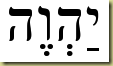
The energies of the cosmos—the electromagnetic sea in which we live—is a definite and consistent expression of the Source and Creator of all things, visible and invisible. Again, Helminski states: “If we could awaken to the sounds smells, sights and sensations of our environment(s) and purely receive their impressions with true sensitive awareness, we would experience more life, and we would activate our nervous systems more completely.” The avenue to this sensitive awareness, this living presence, is through regulation of the brain waves through ‘applied conscious breathing’. Helminski continues, “The alpha state is facilitated by a naturally deep and balanced breath, with equal inhalation and exhalation. It is impossible to overestimate the importance of conscious breathing.” Breath Prayer Now this presents a very interesting intersection of Christianity and Sufi teaching. In Jewish tradition, the Jews were by tradition, not to speak the name of the Source or Creator—the sacr...

electromagnetic frequency

Image
We live in what Kabir Helminski calls “an electromagnetic sea”. In his book, “Living Presence”, he introduces the concept that our bodies are actually ultra-sensitive receptors for the magnetic frequency waves all around us. It is what we experience in our daily lives. Our lives are affected by the level frequency at which we operate. These frequencies, like radio waves, pulsate around us, in “hertz”. The SI unit hertz (Hz) was established in Heinrich Hertz’ honor by the IEC in 1930 for the basic unit of frequency in the International System of Units (SI), and is used worldwide in both general-purpose and scientific contexts. “Hertz”(Hz) can be used to measure any periodic event; the most common uses for hertz are to describe radio and audio frequencies, more or less sinusoidal contexts in which case a frequency of 1 Hz is equal to one cycle per second.(Wikipedia-Heinrich Hertz) Consequently, our earth rotates and operates at a frequency of between 8-10Hz. This level of frequency i...

"faithing", and the "lust for certitude"

Image
Random notes on this thing known as 'faith'. "To 'faith' is to hand over the direction of one's life journey to another, to yield up the' illusion of control' to someone who is essentially beyond one's control, over whom we have no power." Faith is a verb, a process, and not a static reality. In our faith journey, there are several similar or common elements: (1) conversion: also known as metanoia --change of mind or life/direction; (2) a struggle to internalize and act on that conversion experience; (3) a call to integrity; (4) a call to reality; (5) a call to radicality . These elements emerge regardless of era, culture, theology, life-style, or ministry. Faith is primarily a relationship. Any love relationship challenges us to greater honesty and transparency, to awareness of those areas of our lives where we hold back or refuse to face ourselves, or to let others see us as we truly are. To really love others means to become progressively ...